
One of the things I always try to keep an eye out for is the high-quality stock that runs into hard times as these situations can present interesting opportunities to the patient investor. One of the best examples I can think of in this regard is Apple about a decade ago. In the wake of Steve Jobs’ passing, investors grew deeply worried about the company’s ability to maintain its terrific profitability and industry lead in terms of innovation and consumer loyalty. As a result, the stock fell to trade a multiple of just 6-times free cash flow. AAPL has risen more than 10-fold since 2013 and so investors willing to look past the near-term challenges facing the company were very handsomely rewarded.
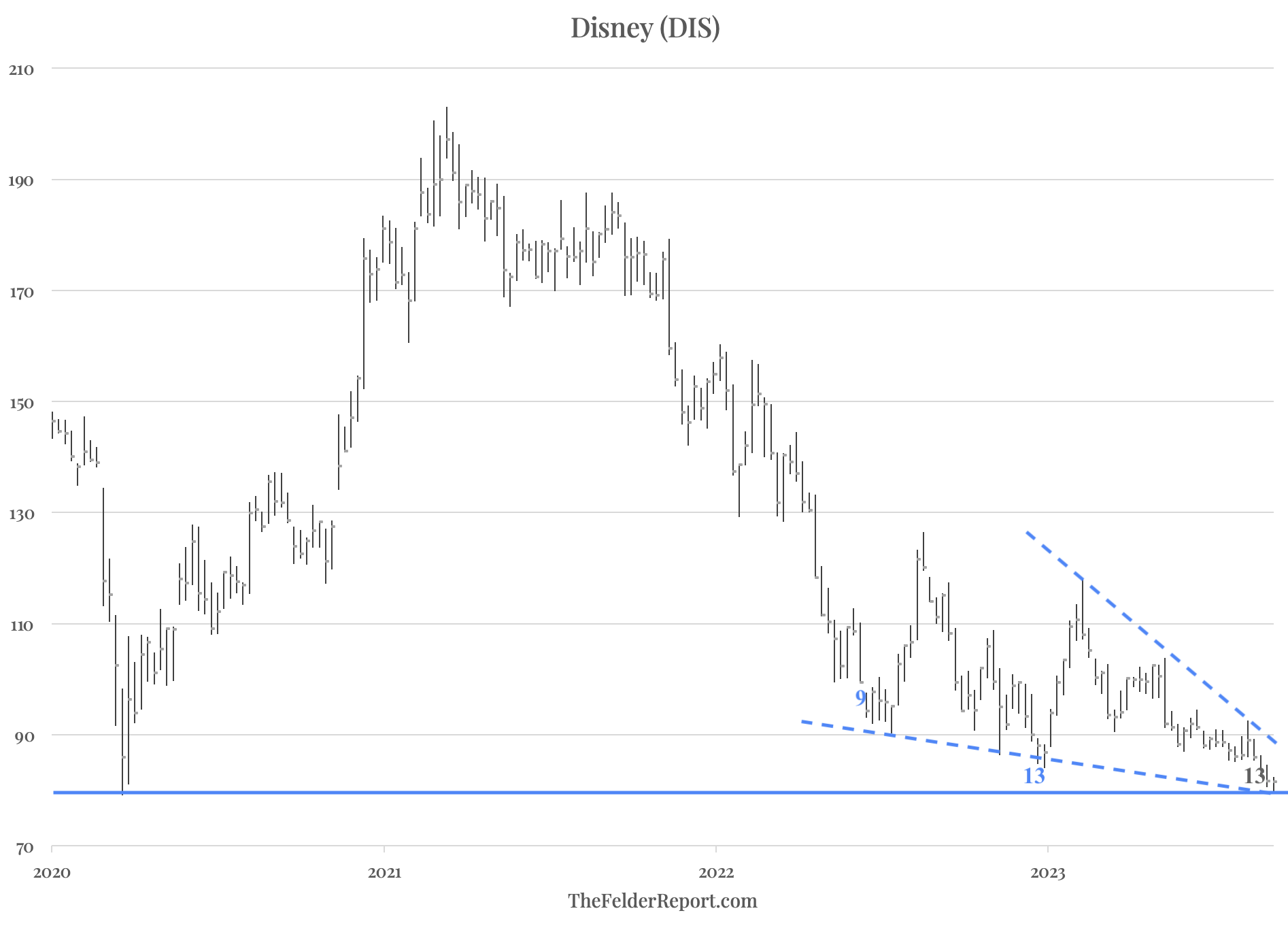
In light of the popularity of the stock today, it’s hard to even imagine a time that Apple was ever so shunned by investors but that is the nature of markets: one day you’re a hero and the next you’re a goat. And while Apple was making this transition to the positive, one of the bluest of blue chip stocks was making the transition in the other direction. Way back on February of 2014, Disney shares broke out above $80 for the first time. Today, they are back testing that level from above, having fallen more than 60% from their peak at over $200 in early-2001.
When you begin to ask how this could have happened to one of the world’s iconic brands, it’s hard to identify just one cause. There’s the public dispute with Florida Governor Ron DeSantis amid the botched transfer of power to CEO Bob Chapek which eventually led to his firing and the return of Bog Iger. There’s the Hollywood writers’ and actors’ strikes. There’s the falling revenue from the dying television business and disputes with distribution partners in this area. And there’s the disappointments with the streaming business which hasn’t fully been able to replace the falling revenue from traditional television and presents a new set of unique business risks (from things like churn and password sharing).
All of these things together have combined to create a sense that the company has lost its way. Certainly, it’s true that the media business finds itself in a time of transition. People aren’t watching cable television, going to movie theaters or buying DVDs as they used to do. And I’ll be the first to admit that Disney has relied far too heavily on milking as much as possible from the creative properties it owns while doing far too little expand that library by investing in the development of new ones. As a consumer, after being avid fan ever since I was a kid, today I have very little interest in the next Marvel movie, live action Disney classic, or Star Wars spinoff.
That said, Disney has gone through periods like this many times before and has found a way to adapt and overcome. That’s what makes it a blue chip stock in the first place: it’s resilience and longevity. And if the company can navigate the streaming transition the way it navigated previous media transitions then we may look back on all the negativity surrounding the shares today as a lot of irrational hand-wringing that merely created another good buying opportunity for contrarian-minded investors. And that’s just what long-term valuation metrics currently suggest.
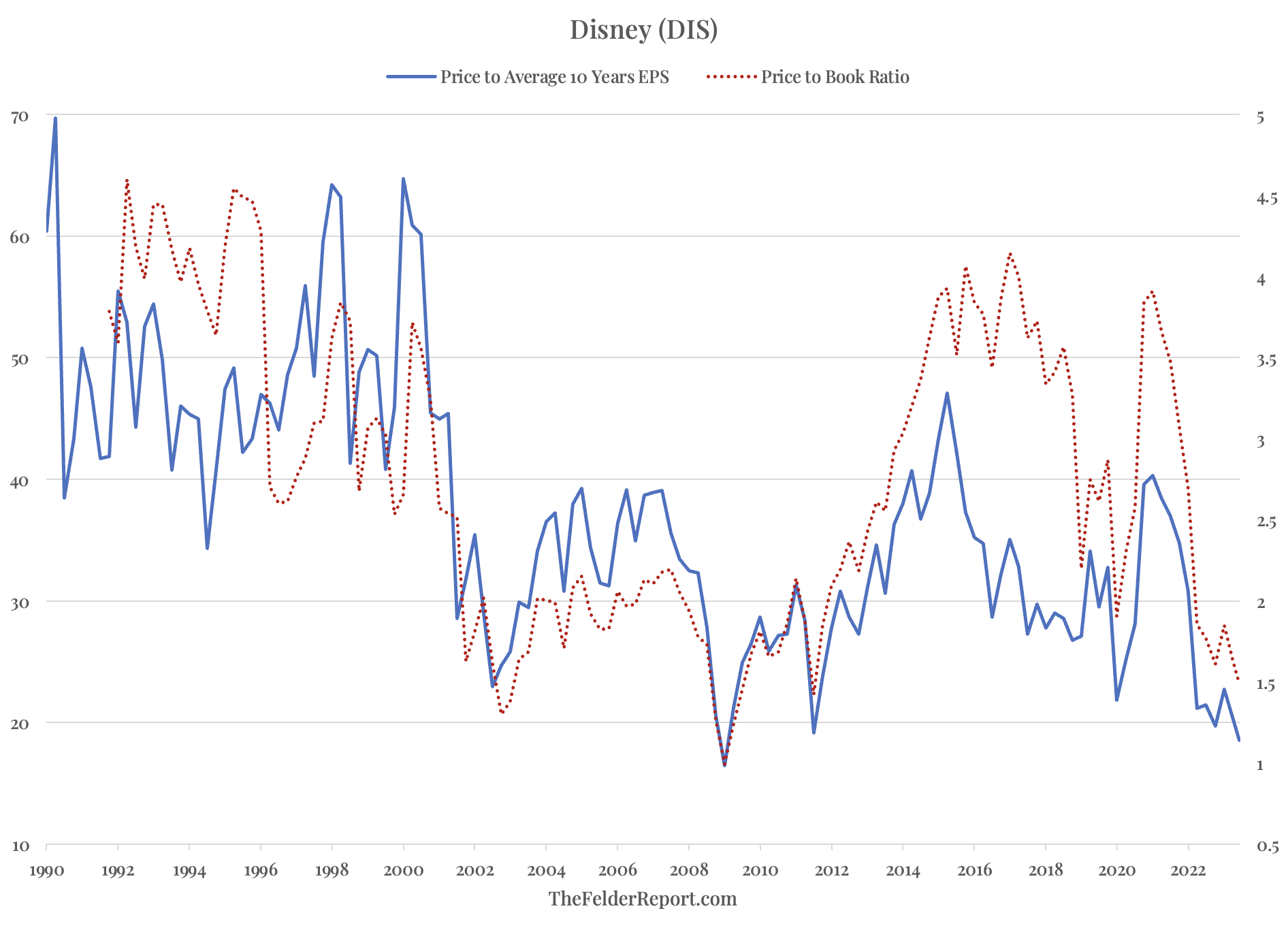
Disney now trades very near its lowest valuation, based on price-to-10-year average earnings and price-to-book ratio, in decades. Only at the bottom of the last two recessions, in 2002 and 2009, did it trade as cheaply as it does today, at least according to the these two metrics.
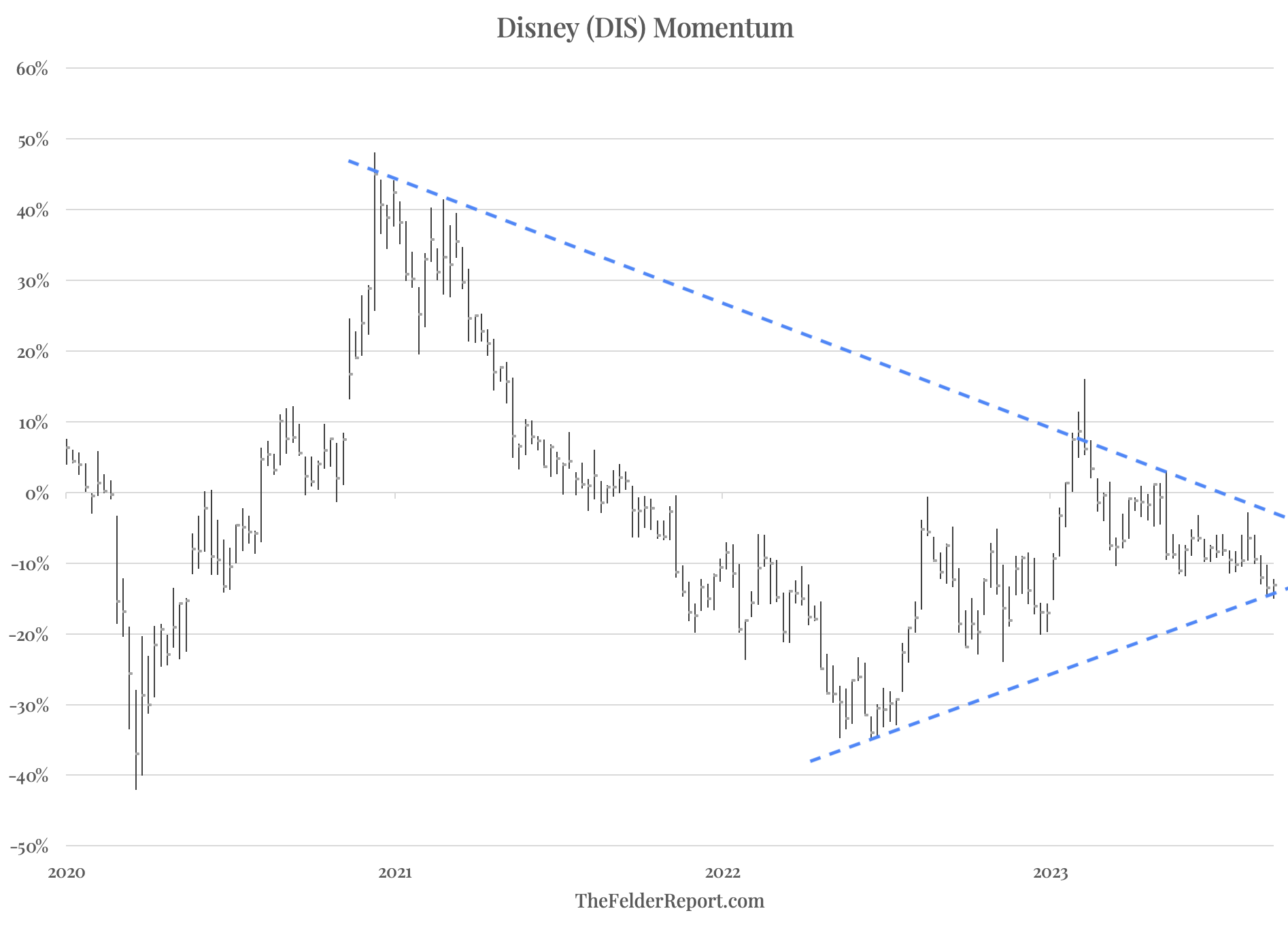
From a technical standpoint, the stock is now testing its Covid crash lows. At the same time, it just completed a weekly DeMark Combo buy signal (gray 13) along with a bullish divergence in momentum (as measured by price relative to the 40-week moving average). Together, these indicators suggest the current downtrend may be nearing exhaustion and is thus primed for reversal.
 Insiders have not been buyers of the shares recently but there have, in fact, been no open market purchases by insiders in Disney shares in at least the past decade. This may be due, at least in part, to the company encouraging employees to take advantage of the Employee Stock Ownership Program instead. Open market sales this year, however, have dwindled to nearly nothing, especially when compared to the massive liquidations of early-2021 when the stock hit the $200 level. Considering the majority of executive compensation comes in the form of equity, the fact that there are almost no sales this year may be a bullish signal similar to, if not quite on par with, open market purchases at other companies.
In sum, Disney looks like an interesting opportunity for investors to take a stake in an American business icon at a reasonable price. None of the challenges currently facing the company appear to represent a mortal threat to the its various lines of business. Things could remain rocky for a time as Disney continues to navigate the transition from traditional forms of media to new areas like streaming but early signs already suggest that its various bundles of ESPN-Hulu-Disney+ are valued more highly by consumers than competing products which highlights the strength of the company’s brands and franchises. And once investors begin to see this sort of light at the end of the tunnel, the shares may begin to discount a less dire outcome.