
Below are some of the most interesting things I came across this week. Click here to subscribe to our free weekly newsletter and get this post delivered to your inbox each Saturday morning.
QUOTE
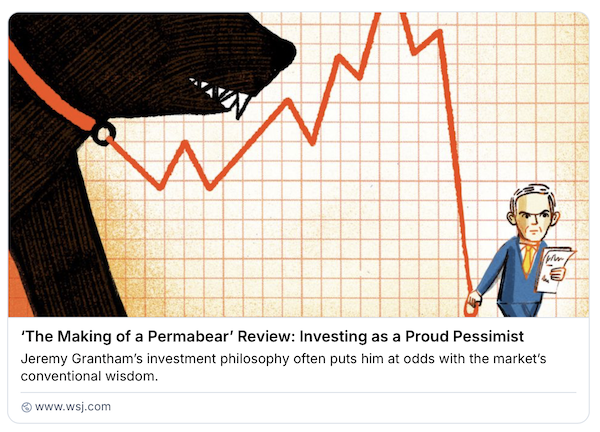
“The realization that you can have an idea, a new idea, or a different idea, and you can be right, and the market, in general, can be wrong, is the single most powerful lesson, I think, that anyone can learn in this business.” –Jeremy Grantham
LINK
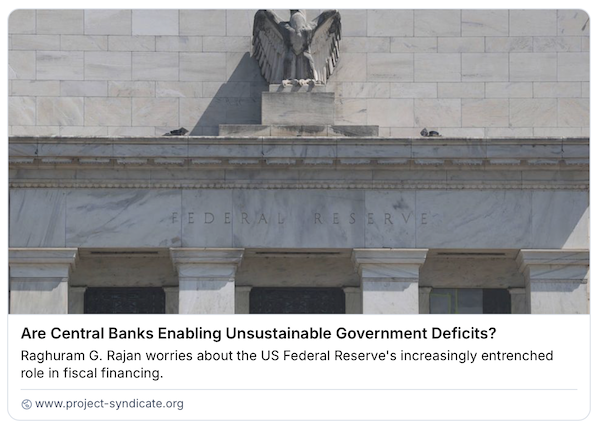
One who learned this lesson long ago is Raguram Rajan who writes, “Recent developments suggest that the US Federal Reserve’s bond purchases are no longer just a ‘monetary operation,’ but an essential component of the US government’s fiscal financing. The sooner that the Fed and other similarly situated central banks recognize the trap they have created for themselves, the better.”
LINK
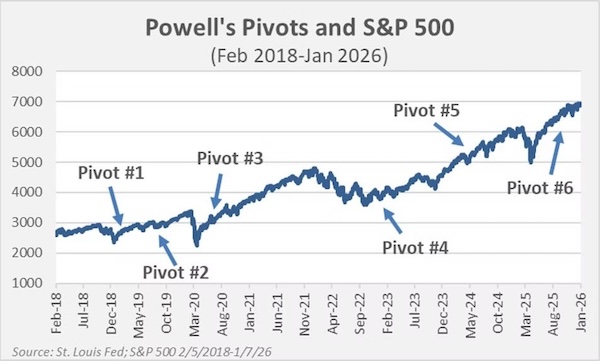
This is not a new trend, by any means. As Eric Cinnamond writes, “We won’t remember Powell as an effective protector of our purchasing power. Instead, we’ll remember him as the chairman who kept the Everything Bubble inflated—aggressively expanding the Fed’s balance sheet, driving record-high asset prices, fueling wealth inequality, creating an affordability crisis, and leaving a government increasingly dependent on the Fed to finance its debt.”
LINK
More investors appear to be coming to the same conclusion. “We are possibly living through an inflection point now — with equities and hard assets, including commodities, changing in terms of relative strength,” Jordan Rizzuto tells MarketWatch.
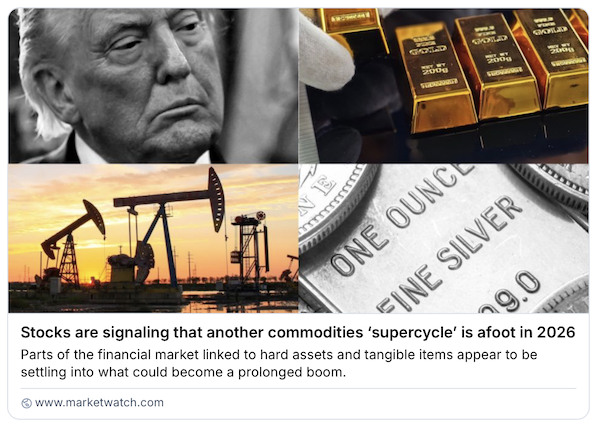
LINK
This comes just as more begin to question the popular AI narrative. Sebastian Mallaby writes, “How long will it take for these companies to reach the promised land, and can they survive in the meantime? Until fairly recently, investors hardly asked that question. They blithely assumed that capital markets would bridge the gap between the emergence of a great technology and eventual profits… That blithe assumption was mistaken. Generative A.I. businesses are not like the software successes of the past generation. They are far more capital-intensive.”
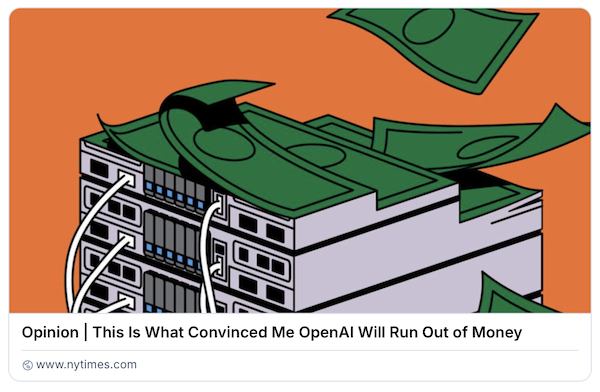
For a deeper analysis of these themes and what they mean for your investments subscribe to The Felder Report PREMIUM and get instant access to our Market Comments, Monthly Chartbooks, Tactical ETF Portfolio and more.