

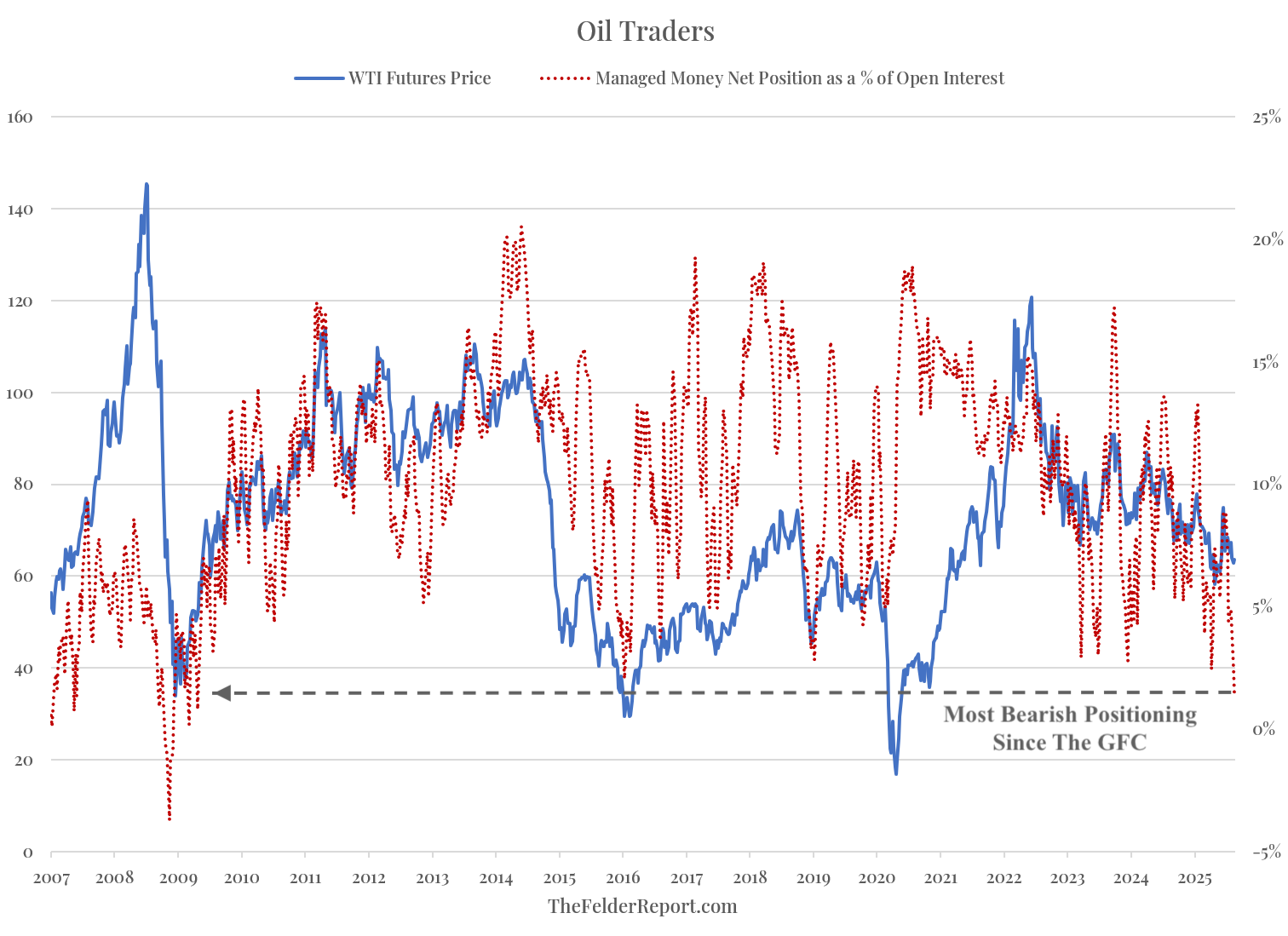
Friday’s Commitment of Traders report showed that the managed money segment took their net long position in crude oil futures last week to its lowest level since Great Financial Crisis. Not even after the crash in the oil price in 2014 and 2015, were traders as bearish as they are today.
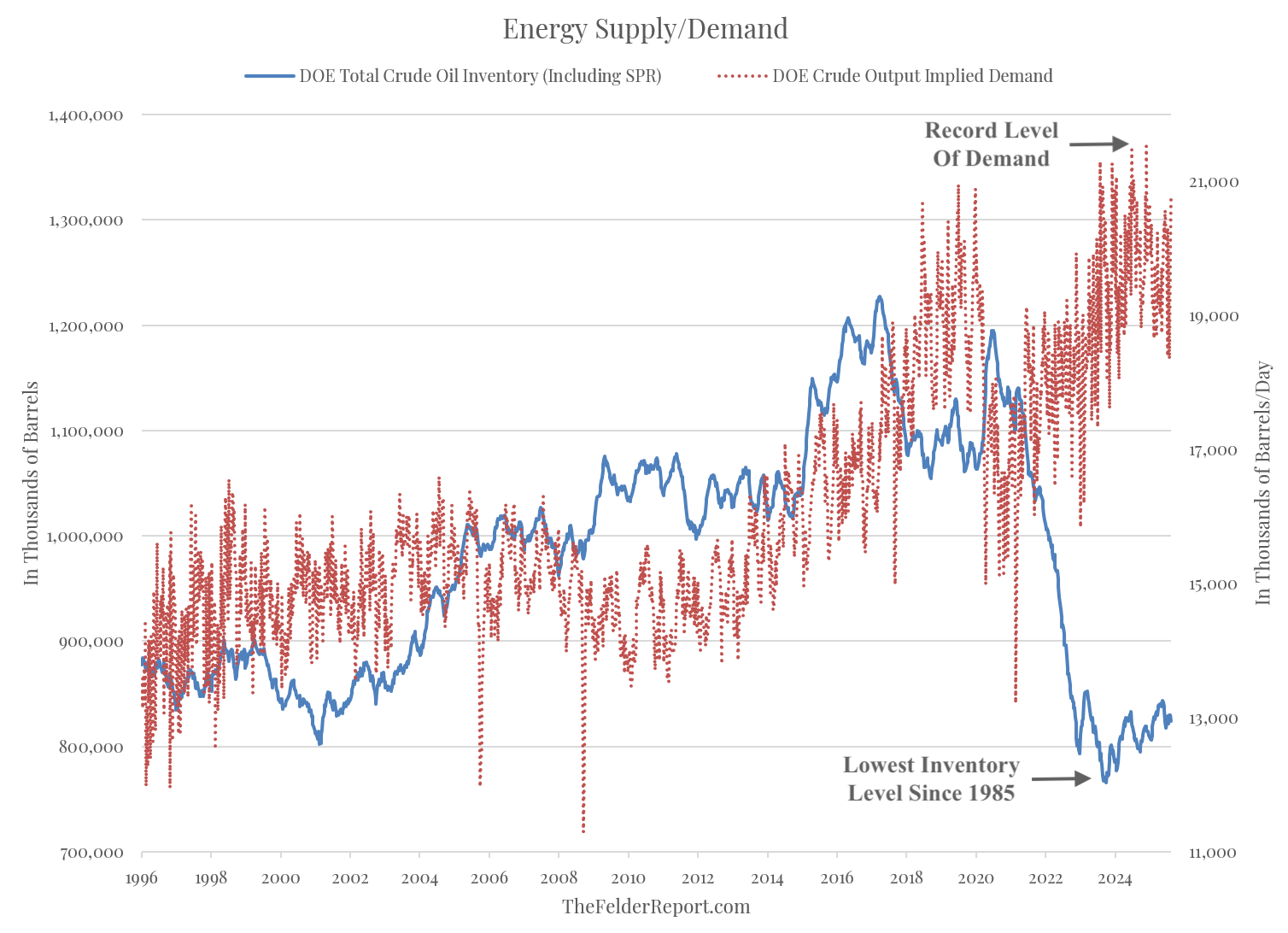
What may be most striking about this is the fact that crude oil demand has soared 75% percent since 2008 while inventories, largely due to the draining of the SPR, have fallen to 40-year lows over the past few years. In other words, oil traders are positioned for another GFC while supply/demand dynamics in the energy market could hardly look more different today than they did back then.
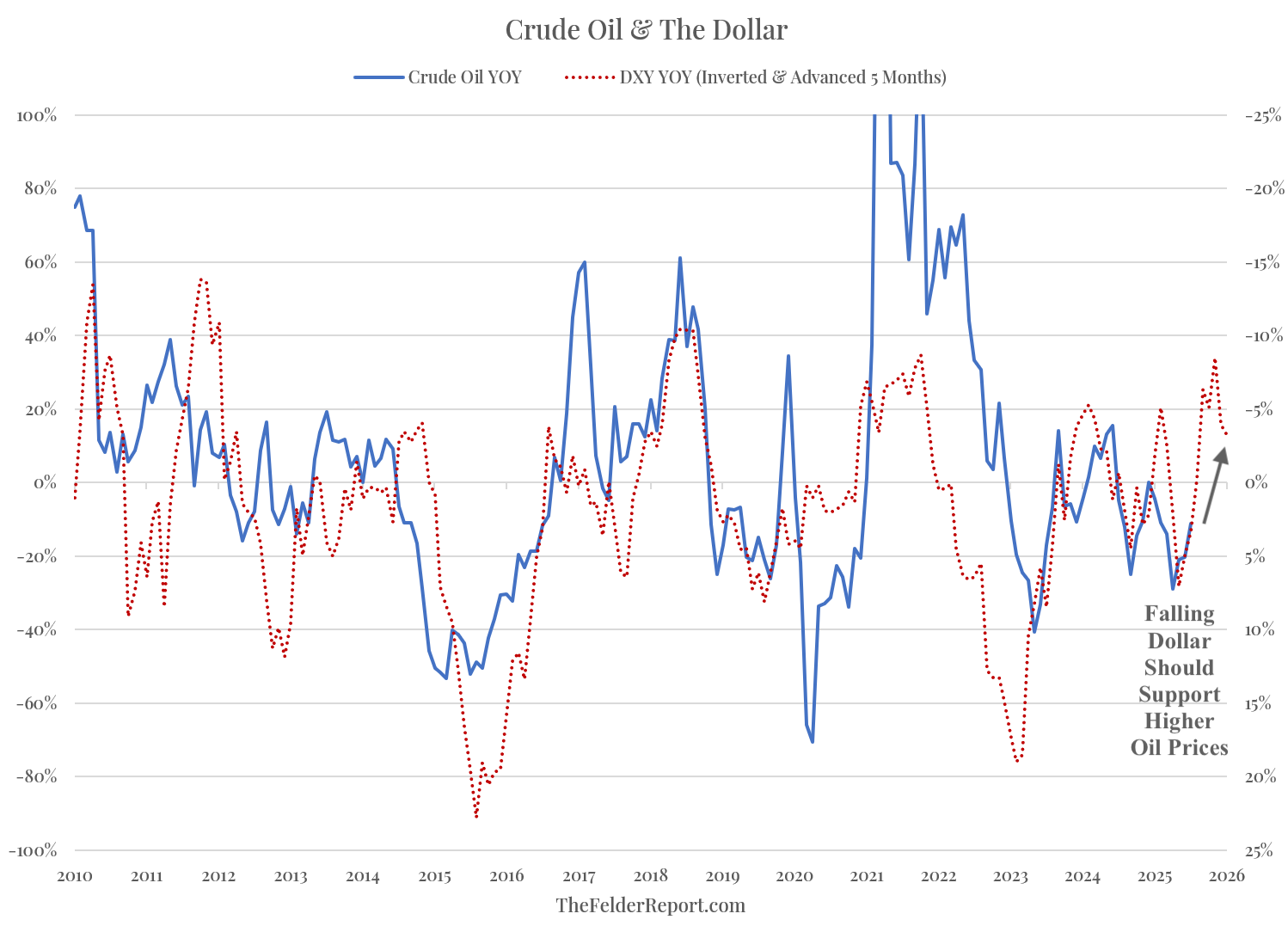
In addition to the dramatically more bullish setup in the supply/demand dynamic, another thing that may disappoint all these bears is the drop in the dollar in recent months. At the very least, that should help to put a floor under the oil price. What is more likely is that it means the oil price will rise back over $70 per barrel in the coming months.
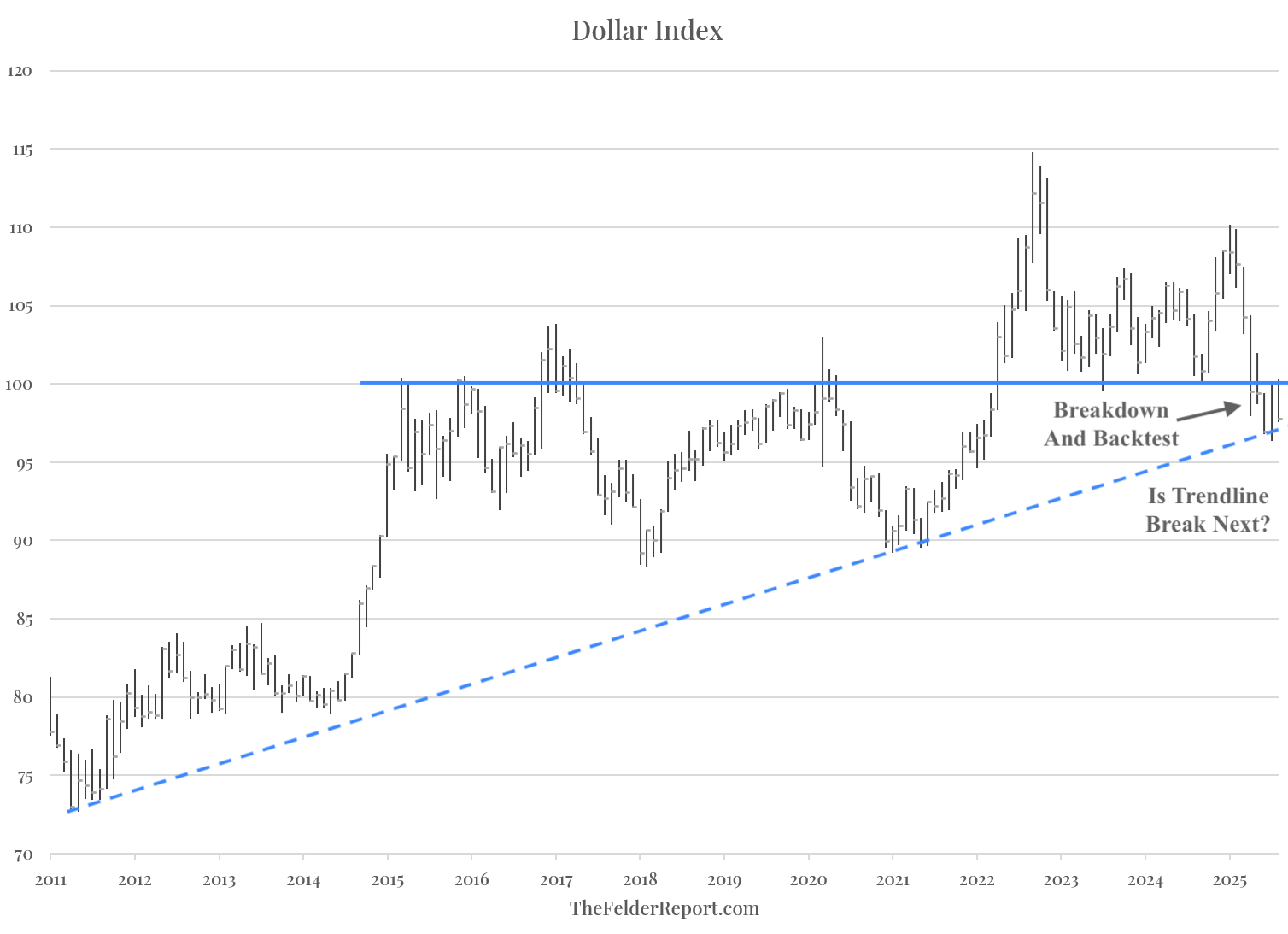
Looking at the dollar index itself through a technical lens would suggest that the recent weakness could be just the start of a larger downtrend. After breaking down below horizontal support at $100, the DXY rallied to test that level from below last month. This month, that countertrend move looks to be failing, bringing a breakdown below the 15-year uptrend line into play.
It’s no coincidence that the oil price looks very much like the mirror image of the dollar index. The major difference is that oil has already broken out of its long-term downtrend. Its recent consolidation represents merely a backtest of that breakout. Further dollar weakness could play catalyst for a resumption of the uptrend that began back at the Covid low.
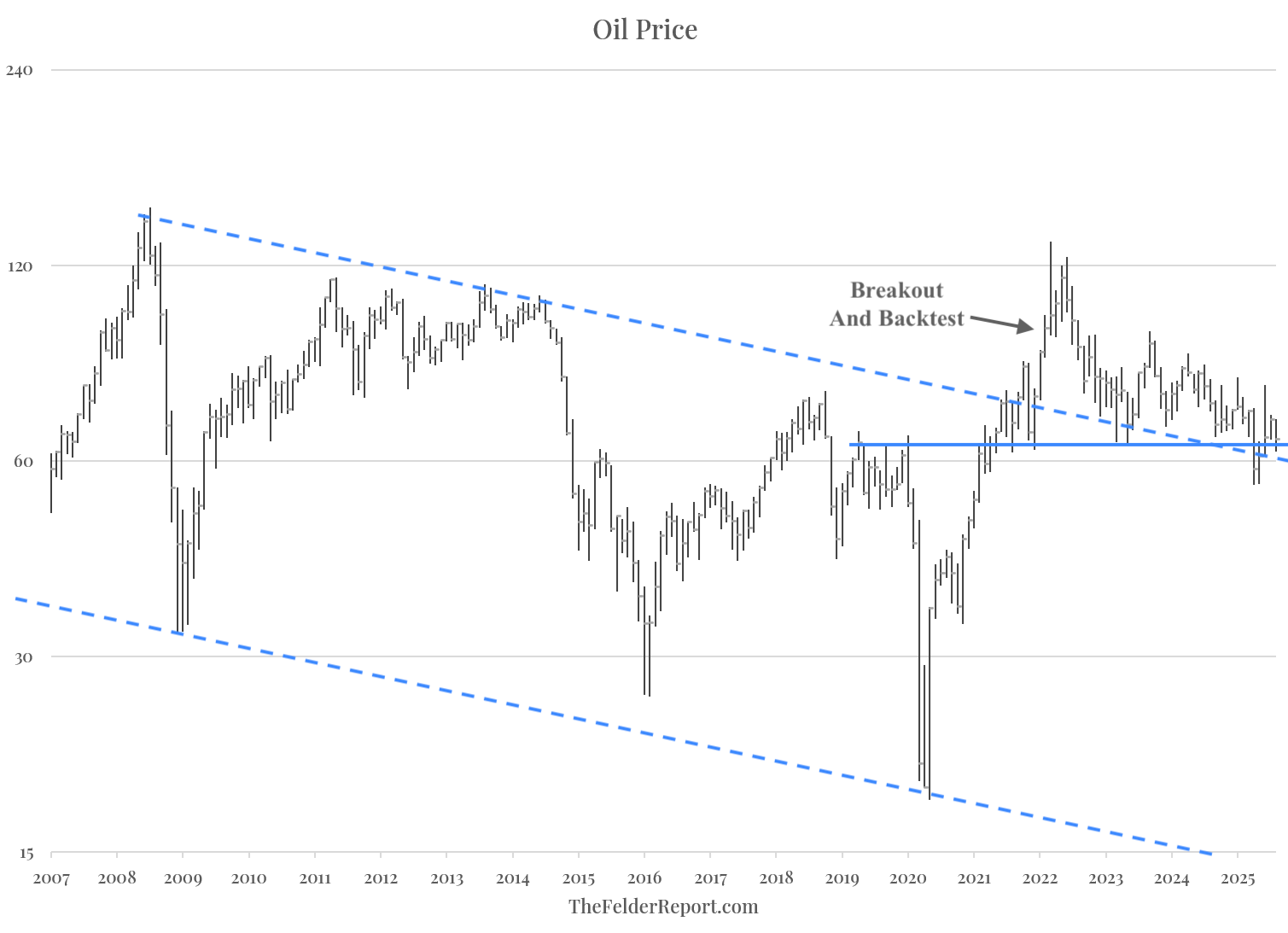
So the long-term technicals and fundamentals appear favorable for crude oil prices while sentiment could not be sending a much stronger contrarian buy signal than it is right now. Of course, all of this is before factoring in the greatest geopolitical risks to the energy market since at least the mid-1970s, which traders seem to be (far too) comfortable ignoring.
