
About a month ago I wrote up a trade idea focused on a defensive sector stock that started with the letter v. That one’s done pretty well so for so I thought I’d offer up another one. Rather than a healthcare stock, however, this one is a utility. To be specific, it is an unregulated, integrated utility meaning it produces energy and sells it to consumers in Texas under its ERCOT system.
As commonly happens, it was a cluster of insider buying that first drew my attention to Vistra Corp. CEO, Curtis Morgan, bought more than $1.5 million in shares earlier this month after buying nearly a $1 million last fall while President and CFO, James Burke, bought nearly $800,000 after buying about $300,000 in December. In addition, a number of directors have also made open market purchases recently.
What gave them the opportunity to buy shares on the cheap recently was the winter storms in Texas a few months ago where the company is one of the largest providers of electricity. Vistra estimates it lost about $1.6 billion during that episode that famously caused such a fiasco for the state’s utilities and tragically resulted in a number of deaths.
In a recent business update, however, Curt Morgan suggested that the market reaction has been overdone. Specifically, he forecast the company would quickly return to generating $3 billion in EBITDA and $2 billion in free cash flow. Perhaps the market either didn’t believe him or was simply unhappy with the fact that, rather than returning that cash to shareholders, the company was going to have to focus on paying down debt in order to maintain its investment grade credit rating.
Either way, the shares have fallen from about $28 in 2019 to $16 today. Clearly, the company’s top management views the current price as a bargain. And if they do, in fact, manage to produce those earnings it’s going to be hard to argue with them. With a market cap of $8 billion that would put it at just four-times free cash flow. And at a current enterprise value of $18 billion, it would trade at about 6-times EBITDA, roughly half the average multiple of its peers.
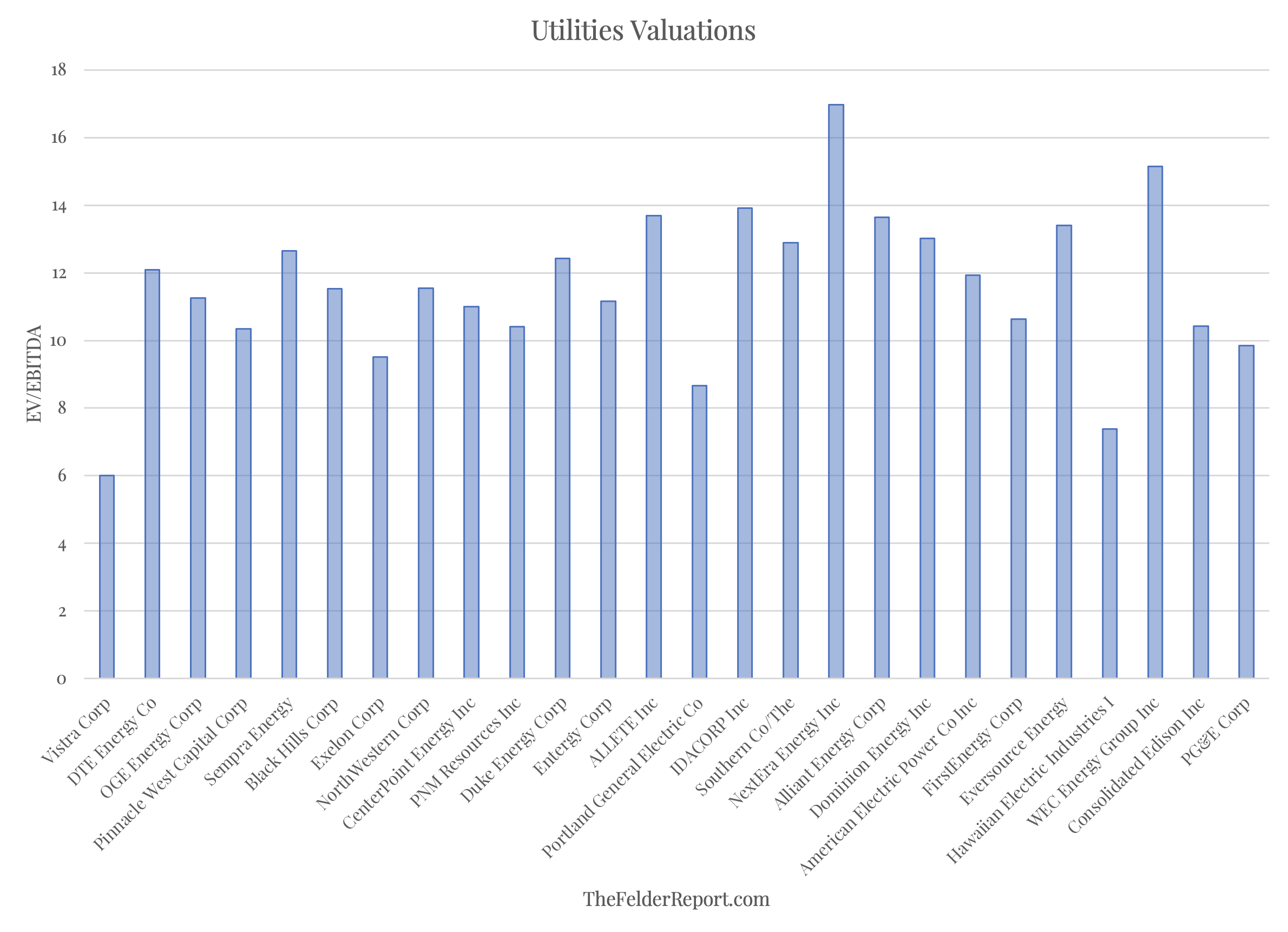
Perhaps this is why Howard Marks’ Oaktree Capital recently became the company’s largest active shareholder and has made Vistra the firm’s single largest position. Oaktree owns about 30 million shares of Vistra most of which was actually purchased before the Texas storm hit so it would seem to be more of a bet on the future of the unregulated, integrated utility model than an opportunistic traditional value play for the firm.
Technically, the stock looks like it has good horizontal support at about $15, a level it has tested and bounced off of several times over the past five years or so.
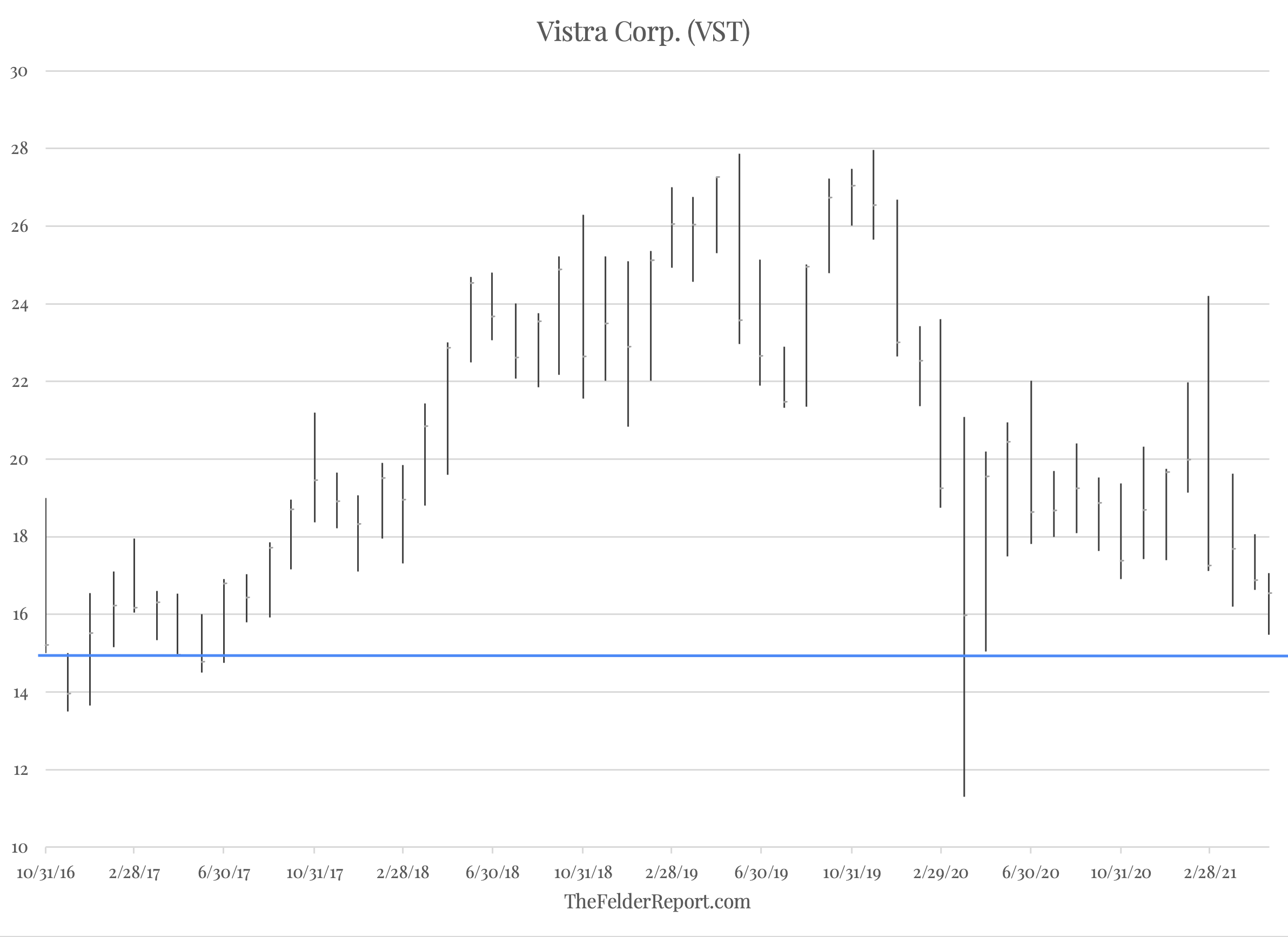
If Vistra were to see its EBITDA recover in the way they suggest and its valuation recover to match the average of its peers, the stock would roughly triple from its current price. In other words, it would appear to offer a decent margin of safety at its current price. The 3.6% dividend yield doesn’t hurt either. From a trading perspective, it may make sense then to put on a starter position here while looking to add should the stock fall back to support just below.