
Below are some of the most interesting things I came across this week. Click here to subscribe to our free weekly newsletter and get this post delivered to your inbox each Saturday morning.
LINK
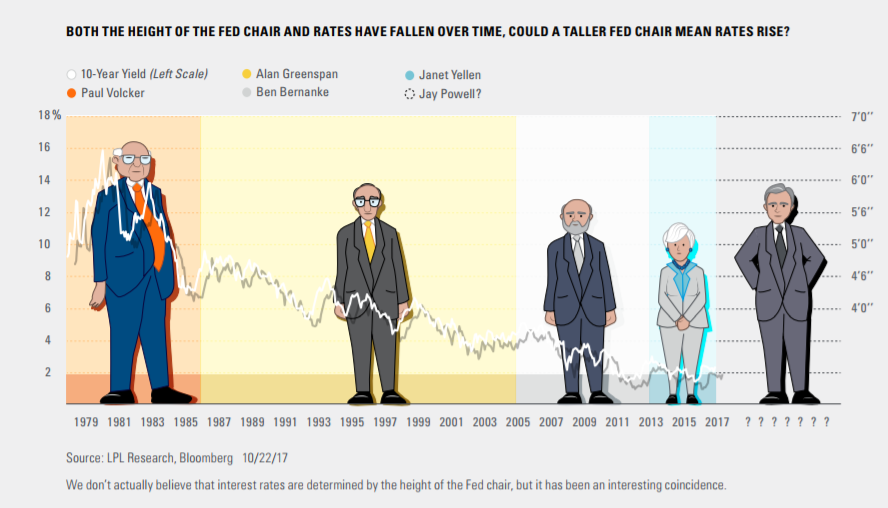
The Fed is poised to cut interest rates next week but, as Ruchir Sharma writes, “This is unfortunately the same alarmist reflex — rush to the rescue at the slightest hint of economic trouble — that has been undermining Fed credibility and fuelling financial bubbles for decades. And the timing could not be less opportune.”
INTERVIEW
Inflation is still running well above the Fed’s 2% target without any sign of returning to that level anytime soon. For this reason, investors may want to consider the fact that, “History suggests that cheap equities defend investors from inflation. If you bought mid-cap value in ‘66 (when stocks peaked) you actually made a positive real return by ‘82. Not a big one, but a hell of a lot better than bonds and a hell a lot better than the S&P 500,” as Russell Napier tells the FT.

LINK
In fact, taking a value-based approach could also be an effective way for investors to both ameliorate the risk associated with the AI bubble and benefit from the innovations it enables. “The lessons learned from investing in tech over the last 50 years are not the right ones to apply now. The way to invest in AI is to think through the implications of knowledge workers becoming more efficient, imagine what markets this unlocks, and invest in those,” writes Jerry Neumann.

LINK
Because it’s not just the inflation backdrop and technology landscape that are shifting, there is a much larger paradigm shift underway. As Bloomberg reports, “China’s President Xi Jinping, Trump’s geopolitical rival, is fond of saying the world is experiencing ‘changes unseen in a century.’ That might not be the half of it.”

LINK
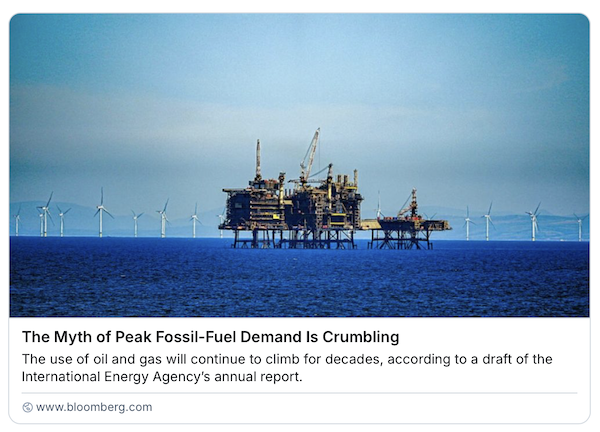
Then again, other things are changing far less than most have come to believe. “The consensus was that consumption of oil, natural gas and coal would peak before the end of this decade. The annual report being prepared by IEA shows decades more of growing fossil-fuel demand isn’t just possible but probable,” reports Javier Blas. This, too, has important ramifications for the markets and beyond.